AI Image Generation API Comparison: Versions, Billing, and Reproducible Evaluation
A request, an output, and an accepted deliverable are different units. Use a traceable configuration and billing record to compare image APIs without confusing advertised prices with delivery costs.
·
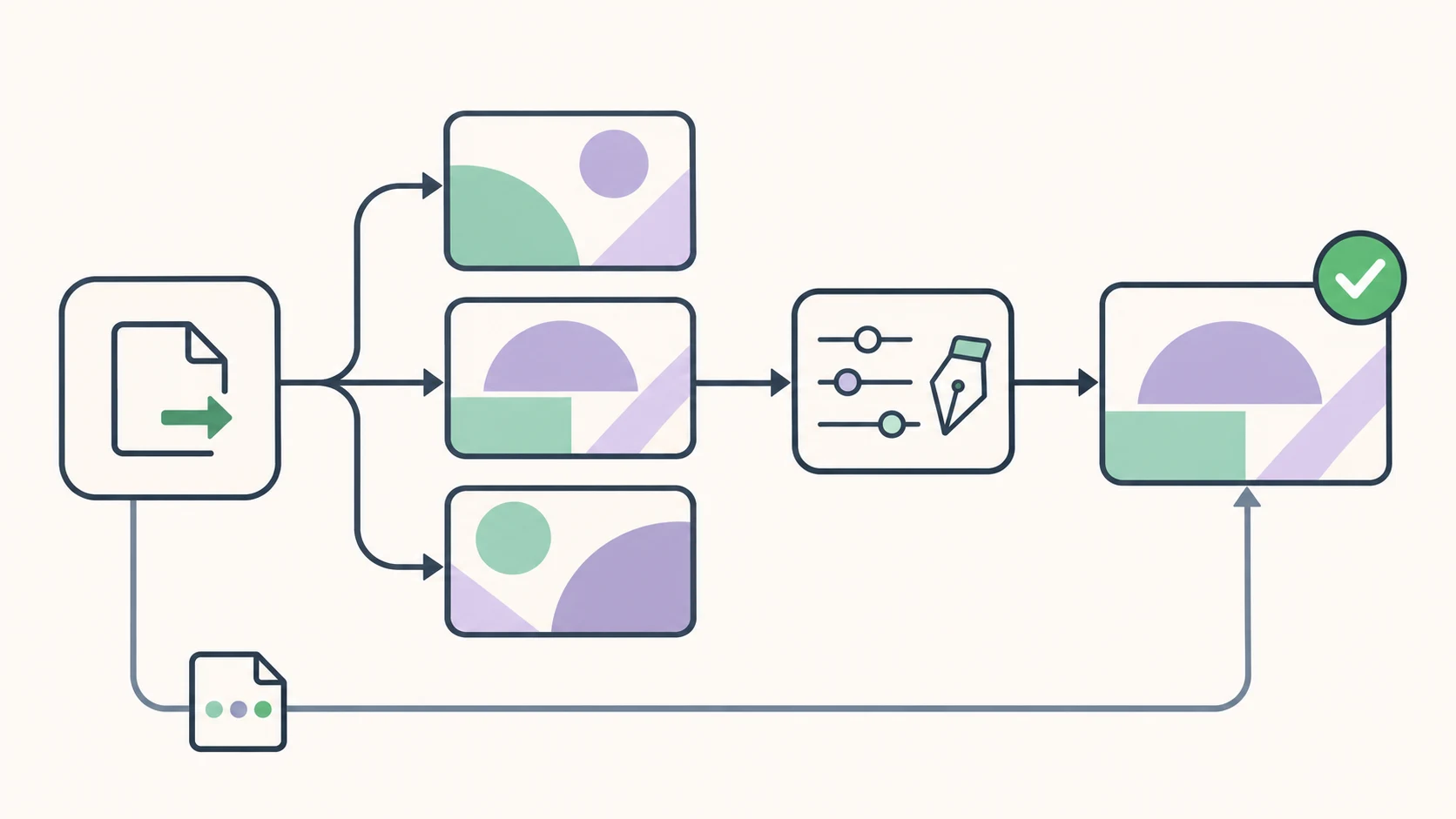
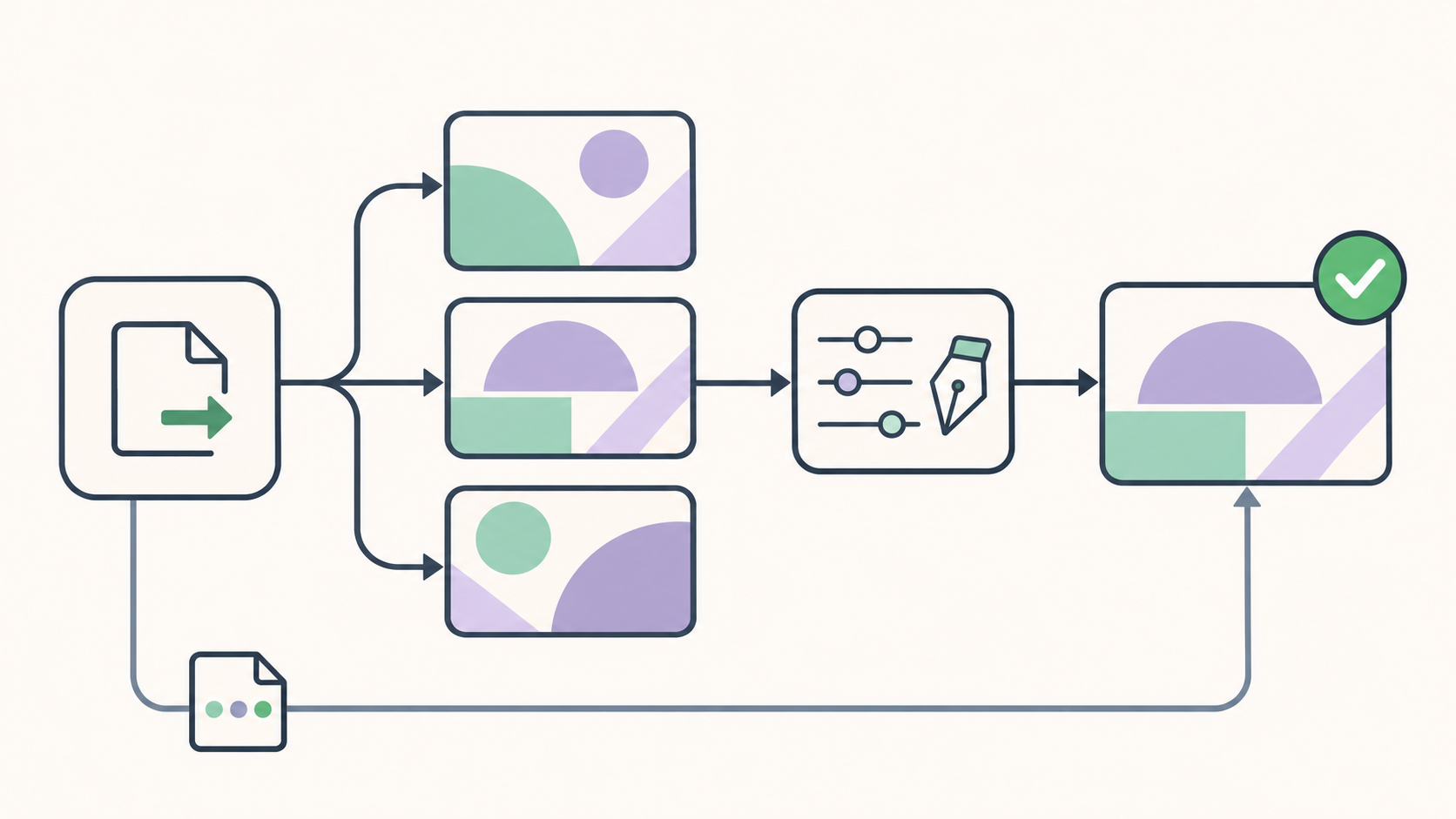
Two APIs can each return an image without completing the same job. One output may meet the delivery dimensions; another may still need upscaling. A request may produce one image or several candidates. Comparing the price of a call can hide all of those differences.
An AI image generation API comparison should evaluate traceable configurations and accepted deliverables, not just brand names. The reference article highlights the distinction between cost per usable image and cost per attempt. The method below develops that distinction without reusing its price table or model recommendations.
The supplied evidence does not include the current official OpenAI and Google pricing pages or the relevant model documentation. This article therefore provides an evaluation method—not current model specifications, verified prices, rankings, or test results.
Separate requests, outputs, and deliverables
Keep two linked records.
A request ledger captures each call: request ID, configuration, start and end times, response status, output count, retry relationship, and confirmed charges. If a request returns several images, request count is not image count.
A delivery ledger captures accepted images: the originating output, business task, acceptance decision, and any editing, upscaling, or manual work. When several candidates yield one selected image, those candidates must not all count as accepted deliverables.
Link the ledgers using request and task identifiers. This makes it possible to investigate an individual failure and reconstruct the attempts behind a delivery.
Compare configurations, not names alone
A service name can cover different versions, quality settings, and access channels. Freeze the following fields before testing. Leave unverified values unknown rather than filling them from a comparison blog.
| Field | What to record | Why it matters |
|---|---|---|
| Provider and channel | Actual service used; direct or another access channel | Keeps prices and terms attributable |
| Model identifier | Full ID, version, or alias; note whether the alias is unpinned | Makes configuration changes traceable |
| Task and inputs | Generation or editing, prompt, reference files, permission to use them | Prevents unlike tasks from being treated as equivalent |
| Output settings | Dimensions, format, quality, outputs per request | Separates settings from model differences |
| Billing evidence | Unit, currency, conditions, official URL, actual verification date | Preserves the scope of a quote |
Evaluate generation and editing separately. A generation endpoint for a model family does not establish editing support for every model in that family. Similar field names do not establish equivalent parameter behavior.
The same prompt is not a complete test specification
Save the exact prompt, input files, parameters, and acceptance rules. Record file checksums for reference images so a replacement file cannot silently change the test.
Distinguish two comparisons:
- Native output: use task-appropriate settings supported by both candidates. If no common setting exists, disclose the mismatch. Identical “high quality” labels do not establish equal compute budgets.
- End-to-end delivery: hold the delivery requirement fixed while allowing different processing paths. Include the editing, upscaling, time, and charges needed to reach it.
Do not collapse these into one score. One asks whether the native output passes; the other asks what completing the task requires.
Define acceptance before viewing results. If packaging text must be preserved, check the required text character by character. If composition matters, specify object counts and spatial relationships in advance. Apply task requirements before aesthetic preferences. Hide model names during review and report results by task rather than letting an overall average conceal a weak category.
Record a seed only where supported; a shared seed does not guarantee matching compositions across models. Set repetition counts in advance and retain failures and refusals, not just the best attempt.
Calculate costs from billing records
Use this accounting definition:
API cost per usable image = confirmed net API charges within the evaluation scope ÷ accepted delivered images.
Include confirmed charges for failures, retries, editing, and upscaling within that scope, less confirmed refunds. Whether an unsuccessful call is billable depends on the applicable terms and billing record. Do not assume every failure is charged—or free.
For end-to-end delivery cost, add separately recorded labor, storage, and transfer expenses, explaining how shared expenses are allocated. Keep provider-direct pricing, other access-channel pricing, and InkRoom pricing distinct.
With zero accepted deliveries, report “not calculable: no accepted deliveries,” not zero cost. Keep unresolved charges pending rather than presenting a falsely precise final figure.
A timeout deserves particular care. No response at the client does not prove that generation failed at the server. Consult the provider’s documented status lookup or explicitly supported idempotency mechanism before replaying a potentially billable request.
Measure single-call latency separately from time to accepted delivery, which includes retries and necessary processing. For small samples, publishing individual timings is more transparent than relying on an unstable P95 alone.
Turn the evidence into an integration decision
Choose by task. Passing a simple illustration test does not establish suitability for packaging with exact text. A retained configuration, acceptance record, and reconciled bill are more useful than declaring an entire brand the winner.
Teams that need programmatic calls or system integration can next review the InkRoom image API introduction and check its current integration information and fee conditions. That entry point does not establish support for any vendor model discussed here, matching prices or parameters, or equivalent output quality.
Related articles and cases
- Canva Craft AI Image Model: Reported Launch, Capabilities and API Status
Third-party reporting dates Canva Craft’s launch to October 22, 2026, and describes composition planning, up to 2K output, Dream Lab access and a preview API. Here is what that report says—and which access conditions still need official verification.
- adobe firefly max 2026: Image-feature availability remains unverified
The supplied evidence does not establish the announcement date, image-editing feature availability, beta access or third-party model selection. This is a publication hold notice, not a verified update report.
- MiniMax H3-Image: What the Image API Confirms—and What Remains Unverified
The available official documentation specifies text-to-image parameters, output limits, and retry-related charges. It does not establish the release date, open-weight license, or reference-image editing workflow.